Do You Have Tendonitis?
How to Know (and Why “Walking It Off” Makes It Worse)
You pushed yourself hard during a weekend run, joined a new tennis league, or simply spent a long day on your feet. The next morning, you expect your legs to feel a little heavy. But as you step out of bed, your ankle or heel is throbbing. It feels stiff, tender to the touch, and uniquely sharp. Is this just “normal” soreness that you should try to walk off? Or is it a warning sign of structural damage?
At Pomona Valley Podiatry Group, we often see patients confusing temporary muscle fatigue with Tendonitis. And unfortunately, that mix up can lead to serious complications, some of which require surgery to fix. The following blog offers a quick symptom checklist so you can spot the “red flags” and respond accordingly.
What is Tendonitis? (The Mechanics of the Injury)
Tendonitis is the inflammation or severe irritation of a tendon, the thick, fibrous tissue that connects your muscles to your bones.
While it frequently affects the Achilles tendon at the back of the heel, it can also impact various other tendons throughout the foot and ankle. Because tendons have a notoriously poor blood supply, they heal very slowly.
- The Root Cause: Tendonitis rarely happens overnight. It is typically the result of repetitive stress, chronic overuse, or an acute injury that overloads the tissue.
- The Danger: When you try to “play through” tendonitis, the micro-tears in the tendon worsen. Chronic inflammation can eventually lead to tendinosis (degeneration of the tendon) or, in the worst case scenario, a full-on rupture.
The “Red Flag” Symptom Checklist
How do you know if you need an ice pack or a podiatrist?
Look out for these specific warning signs of tendonitis:
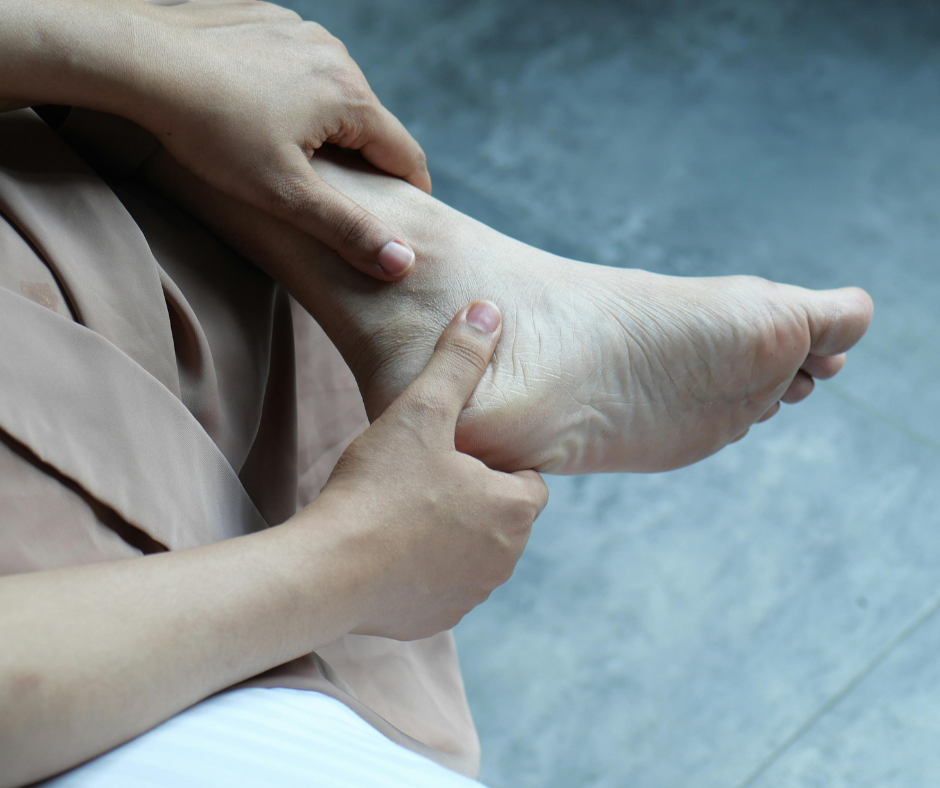
- Pinpoint Pain & Tenderness: General soreness covers a wide area. Tendonitis usually features localized pain directly along the path of the tendon.
- The “Morning Creak”: Severe stiffness and pain after periods of inactivity, particularly during your first steps in the morning.
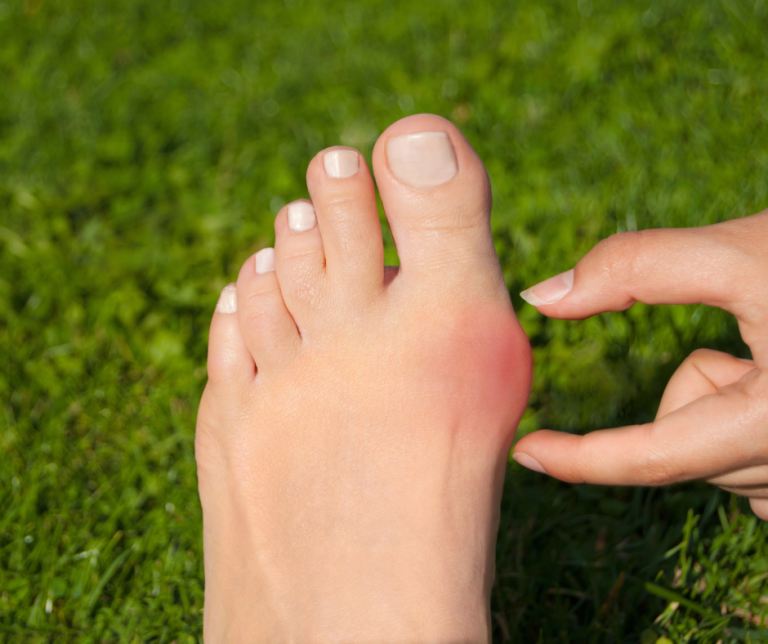
- Swelling and Inflammation: The affected area may look visibly thicker, puffier, or redder than your other foot.
- A Grating Sensation: You may feel a crackling or grating sensation (crepitus) when moving the joint.
- Limited Range of Motion: A feeling of weakness or an inability to fully flex your foot or ankle.
How We Treat Tendonitis
You do not have to sit out the entire season, but you do need to support your mechanics to promote true healing. Our goal is to reduce your inflammation, promote cellular healing, and restore the structural strength of your tendon to prevent re-injury.
Our personalized treatment plans often include:
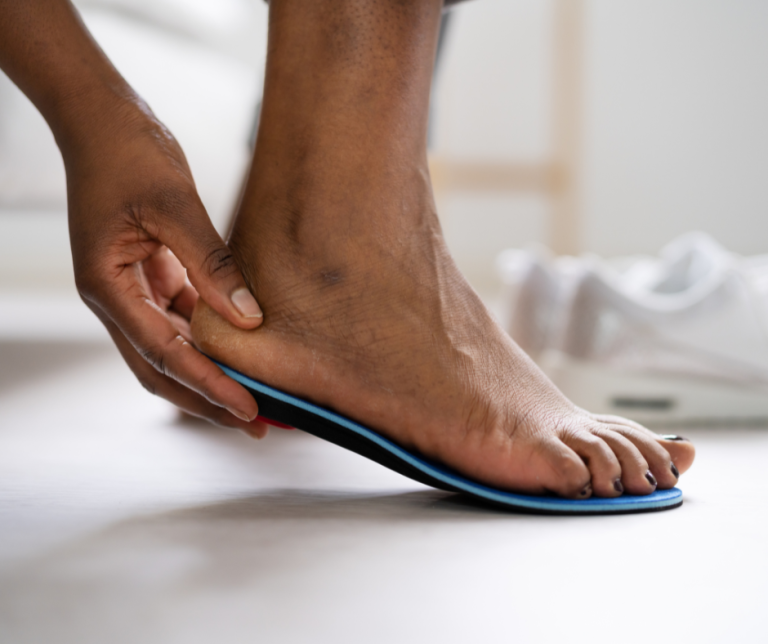
- Conservative Relief: A combination of targeted rest, ice therapy, and supportive bracing takes the immediate tension off the injured tendon. Custom orthotics might also be used, as they can both support the arch to offload tension and stabilize the heel as well.
- Rehabilitation: Physical therapy exercises designed to safely rebuild flexibility and strengthen the surrounding stabilizer muscles.
- Advanced Therapies: For stubborn, chronic cases that refuse to heal with rest alone, we use non-invasive treatments like shockwave therapy to jumpstart your body’s natural repair process.
Pain Doesn’t Need to Set Your Pace!
Tendonitis can be a persistent, frustrating issue that interferes with your mobility, so don’t wait for a minor micro-tear to become a major rupture. Give us a call and start stepping toward recovery instead. It’s simpler, easier, and faster than you think…
As long as you know a good podiatrist!
Do not let structural pain dictate your lifestyle or keep you off your feet! At Pomona Valley Podiatry Group, Dr. O’Neillutilizes a fully comprehensive approach to foot and ankle care. From conservative therapies to state-of-the-art advanced treatment options, we deploy the precise medical interventions necessary to rebuild your foundation and keep you moving safely. Stop waiting and start healing. Contact Pomona Valley Podiatry Group today to schedule your comprehensive evaluation and take the first step toward pain-free movement.